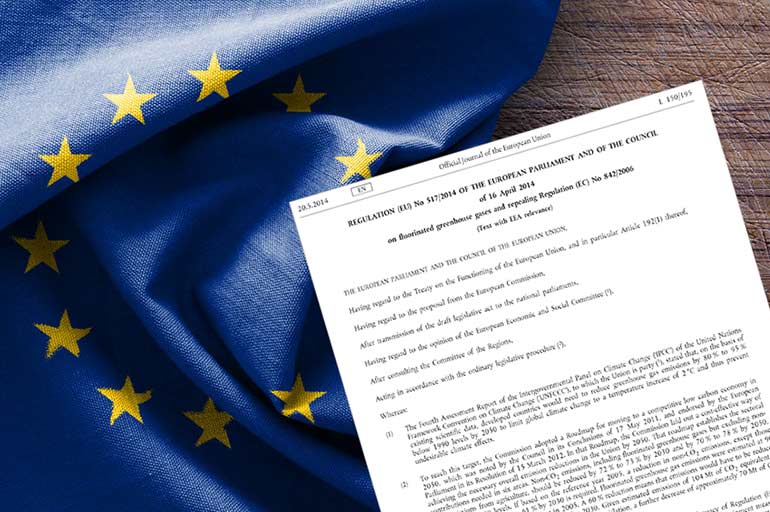
The new Regulation (EU) 2024/573, which entered into force on March 11, 2024, is one of the most significant legislative actions of the European Union aimed at reducing fluorinated gas (F-gas) emissions as part of the broader strategy toward climate neutrality by 2050. The regulation replaces the previous Regulation 517/2014 and introduces stricter rules concerning the use, distribution, and placing on the market of refrigerants, with the goal of drastically reducing their global warming potential (GWP).
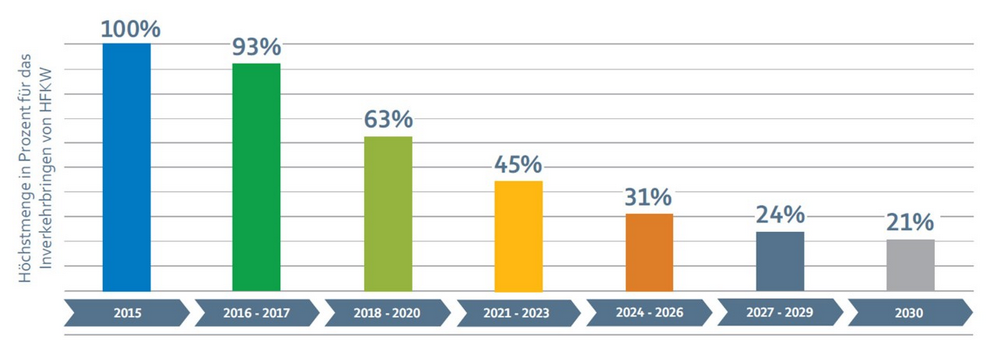
The new legislation provides for a gradual phase-down of hydrofluorocarbons (HFCs) available on the EU market, targeting a reduction to 23% of 2015 levels by 2036. This means that the refrigeration and air-conditioning industry must adapt to new, more environmentally friendly refrigerants with a smaller environmental footprint.
The gradual phase-out of specific refrigerants is also a key provision of the new regulation. Specifically, from 2025, the use of HFCs with a GWP above 2500 is prohibited in maintenance and service equipment, with the exception of critical applications such as industrial refrigeration below -50°C. From 2030 onward, the regulation imposes even stricter restrictions, banning HFCs with a GWP above 750 in many applications, including household and commercial air-conditioning units. At the same time, control and leak-monitoring measures are strengthened, as well as requirements for the safe handling and decommissioning of equipment, in order to prevent the uncontrolled release of these gases into the atmosphere.
A significant innovation of Regulation 2024/573 is the introduction of a digital monitoring system that allows the registration and tracking of the trade and use of F-Gases across the EU. In this way, transparency is enhanced and the issue of illegal refrigerant trafficking—strongly observed in previous years—is addressed. As of January 1, 2025, the submission of compliance declarations becomes mandatory for businesses placing F-Gases on the market, while product labelling must include information regarding the GWP of the substances, their fluorinated gas content, and their expected environmental impact.
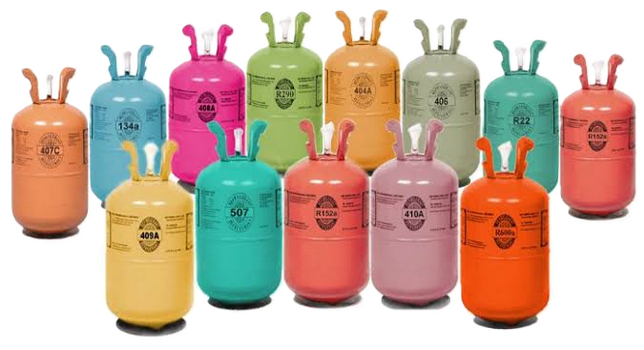
Compliance with the new requirements is a challenge, especially for businesses operating in the refrigeration, air conditioning, and heat pump sectors. Refrigeration technicians are called to adapt to the new standards by choosing more environmentally friendly refrigerants such as hydrofluoroolefins (HFOs), CO₂, and ammonia, all of which have significantly lower GWP values. Training and continuous education of professionals in the field are essential, as the transition to new refrigerants requires specialized technical knowledge and adherence to stricter safety protocols.
It is clear that the new F-Gas Regulation will have a substantial impact across the entire supply and maintenance chain of refrigerants. Companies operating in the sector must adapt in time to the new requirements to ensure the sustainability of their operations, while end-users of cooling and air-conditioning equipment will need to shift towards solutions with a lower environmental footprint. The implementation of the new legislation is expected to shape a more sustainable market, drastically reducing the impact of fluorinated gases on climate change and promoting the adoption of low-GWP technologies throughout Europe.